Two episodes into American Hostage, we already know the basic facts of the story are only part of what makes it so fascinating.
Tony Kiritsis kidnapped mortgage executive Dick Hall in Indianapolis in 1977, wired a shotgun to his head, and spent more than two days parading him around while demanding an apology, immunity, and the opportunity to tell everyone exactly how badly he believed he’d been wronged.
It’s an extraordinary story. It’s also one we’ve heard before.
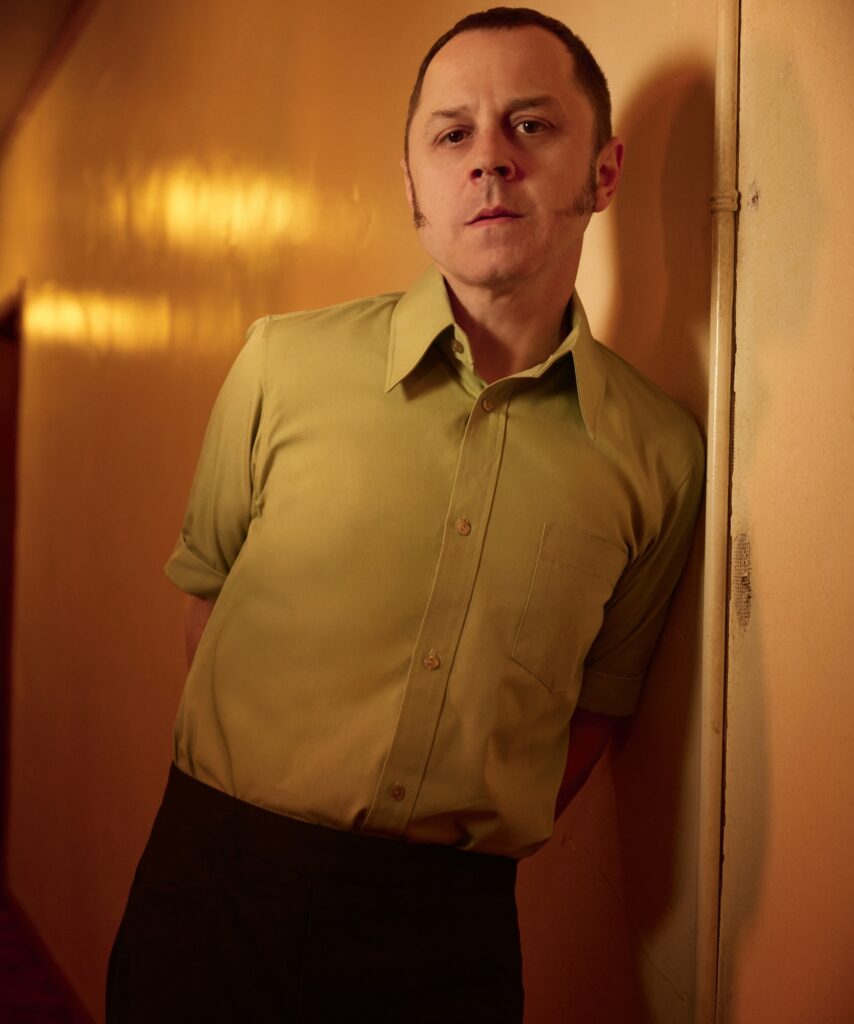
Kiritsis and his infamous dead man’s line have already inspired a podcast, a documentary, and the recent feature film Dead Man’s Wire. American Hostage now has eight episodes to rummage around in the same history.
And somehow, it still doesn’t feel like too much.
As we discussed in our American Hostage premiere review, part of what makes this version so compelling is how modern Tony’s approach to his grievance feels nearly 50 years later. He didn’t simply want revenge against the Hall family. He wanted an audience.
More specifically, he wanted to be heard.
That’s something American Hostage co-creator and co-showrunner Shawn Ryan believes is at the heart of our continuing fascination with Kiritsis.
“Tony, who clearly was existing on the outer bounds of acceptable human behavior, made sense a lot of the time, and said things that really resonated with people, and got to the core of their own frustrations with the system that they live under,” Ryan told TV Fanatic.

The decades separating Tony’s crisis from ours haven’t necessarily changed those frustrations as much as we’d like to believe.
“We’re going through economic turmoil now; we’re going through a lot of dissatisfaction with the potential of the American dream,” Ryan said. “It’s interesting to see that 50 years ago, there were people going through the same things.”
That’s the uncomfortable part about American Hostage.
Tony does something objectively horrifying, and then he talks — and sometimes you understand exactly what he’s talking about.
That doesn’t make what he did defensible, and the series doesn’t need us to think it does. But it does make Tony far more interesting than the one-note lunatic he could easily have become.
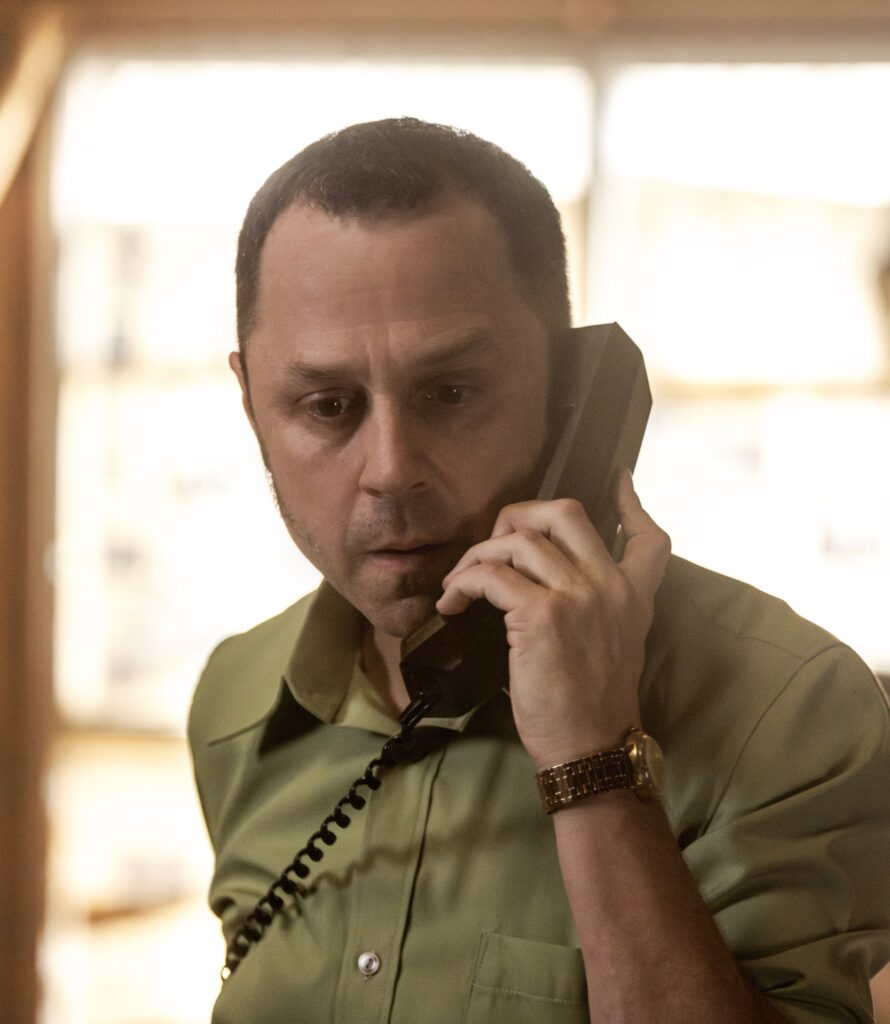
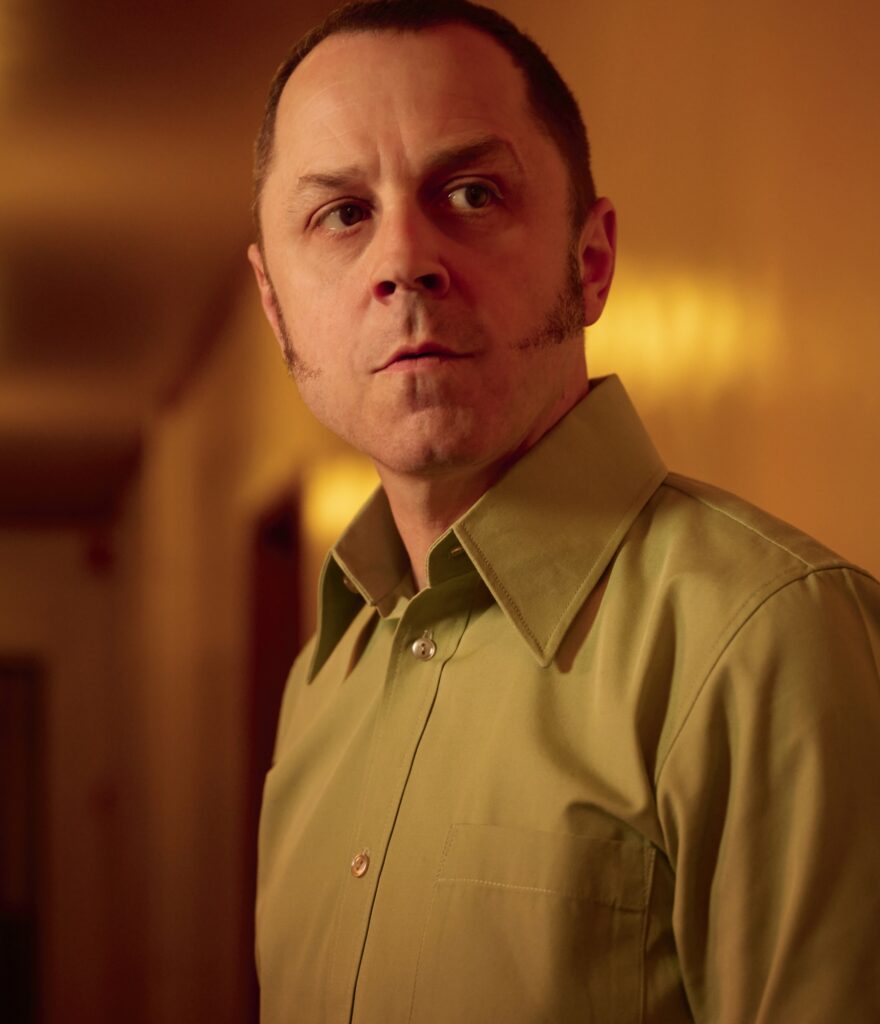
For Giovanni Ribisi, finding the man underneath the shotgun was essential.
“I really wanted to have the humor, and that was almost a nod to Tony because in just the research that I was doing, I feel like he was about bringing people together out of the context of the situation and what was going on in his life regarding Meridian Mortgage and the Hall family,” Ribisi said.
“I think that he was gregarious and he had a sense of humor and a foul mouth, but there was something that was magnetic about that.”
Add TV Fanatic as a Trusted Source on Google!
Get More of Our Coverage!We’ve certainly seen that already.
Tony’s profanity alone has supplied some of American Hostage’s funniest moments, and there is something inherently absurd about a man holding a press conference while another human being has a shotgun wired to his neck.
That particular image was part of director and executive producer Adam Arkin‘s earliest conversations with Ribisi.
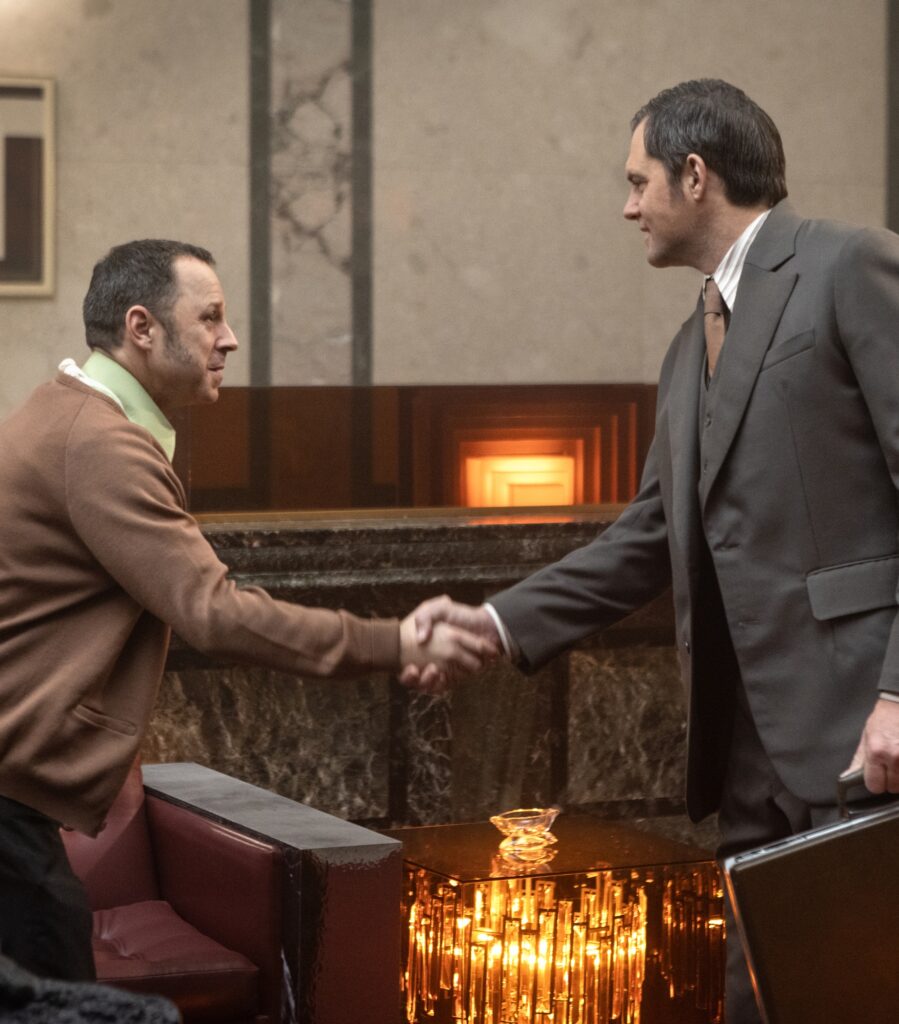
“This is a guy who’s holding a press conference with a shotgun held, strapped to a man’s head and police officers standing right there,” Ribisi recalled.
“And we were giggling about that.”
As you do.
But the humor is important because American Hostage isn’t treating these people as pieces on a true-crime chessboard. They’re human beings, and human beings are ridiculous even on the worst days of their lives.
Mireille Enos, who plays Fred Heckman’s wife, Barbara, credited Arkin with establishing that difficult tone from the beginning.
“He sees the world with all its complexity and darkness and everything through a lens of humor,” Enos said. “So we were so lucky to have him.”

Arkin, meanwhile, pointed to something he learned from his father, Alan Arkin.
When people asked what made his father’s acting so special, Arkin said one of the first things he’d mention was “the ability to play comedy, extreme comedy with dramatic stakes.”
That’s also his explanation for why American Hostage can make us laugh without forgetting that Dick Hall could die at any moment.
“As long as the stakes are grounded in a reality, you can pivot from drama to comedy,” Arkin said. “The way people are navigating those stakes can pivot from dramatic to comedic, and you end up believing both of those extremes.”
Kristoffer Polaha‘s Dick Hall may be the clearest example of why those human details matter.
The first two episodes don’t give us easy access to Dick. He’s remarkably compliant with Tony, and much of what we initially learn about him comes through dreams and fragments of the life he had before someone put a wire around his neck.
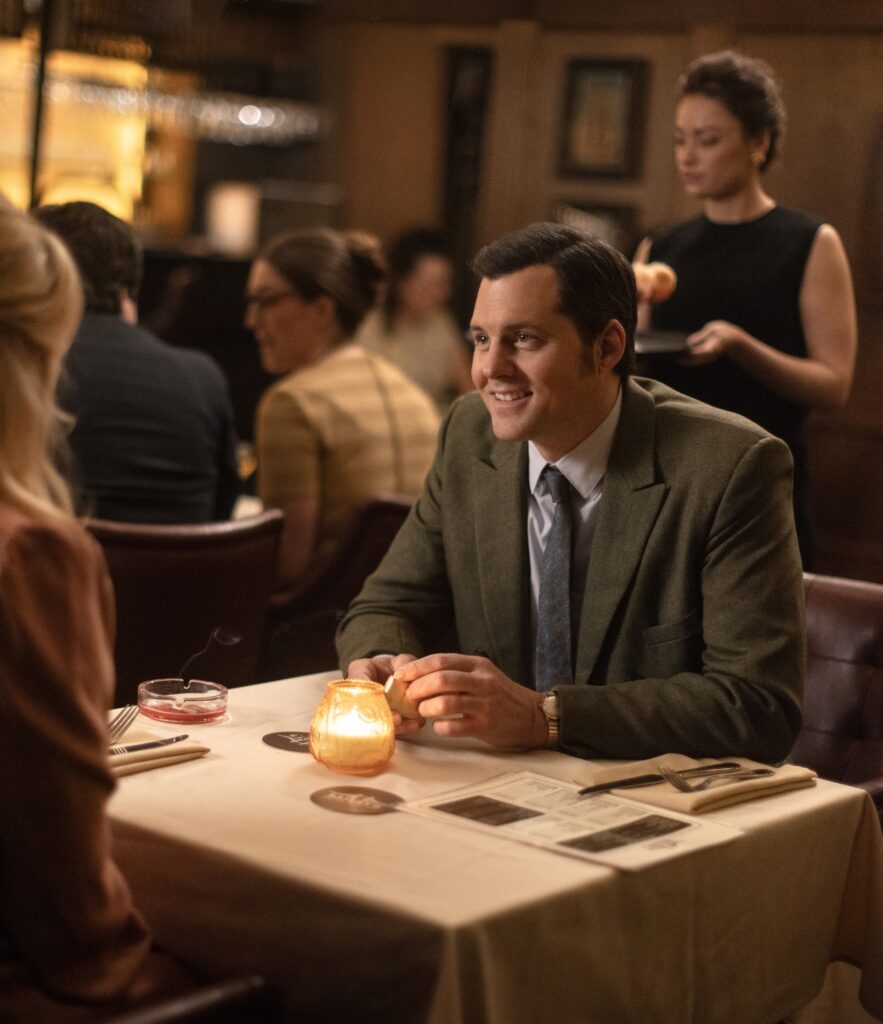
Polaha was very aware that he wasn’t merely playing a character.
Dick Hall had a wife and four children. His family is still here.
“It would be very easy to paint Dick Hall with a big broad stroke of he’s a part of a system that’s oppressive. He’s a part of the patriarchy. He’s a bad guy. And he was doing bad things and deserved what he got,” Polaha said.
“And I just refused to accept that. I thought, nope, nope, he’s not a bad guy. And what is his story?”
That question led him to a much more complicated man.
Dick was an athlete and a Navy veteran. He was struggling with alcoholism. He was also a man of faith who, despite being physically capable of fighting Tony, chose pacifism.

When I asked Polaha what Dick understood about Tony that kept him on that path, his answer was strikingly simple.
“I think he saw him through God’s eyes,” Polaha said. “And I think he saw the humanity in Tony and loved him.”
Ribisi added that Tony and Dick weren’t strangers thrown together by the hostage crisis. They’d known each other and worked together for years.
According to accounts Ribisi encountered during his research, there were even moments during those long hours when the two men could be heard laughing together.
That’s much harder to fit into the convenient boxes of villain and victim.
American Hostage seems increasingly uninterested in convenient boxes.

It’s also interested in people who would normally exist outside the frame of a story like this.
Barbara Heckman certainly never volunteered to become part of Tony Kiritsis’ hostage crisis.
As we’ve already seen, Fred’s involvement doesn’t remain safely at work. Tony calls the Heckman home. The FBI arrives there. Eventually, Barbara is asked to enter the life of Dick’s wife, Ibby, at the worst imaginable moment.
Enos described the situation as “wildly uncomfortable.”
“There’s a hostage taker on her kitchen phone, and then there’s an FBI agent in her entryway. And she’s supposed to just act like this is normal, all in a day’s work.”
Then she’s asked to show up at Ibby’s home, enter this stranger’s grief, and be present while she speaks with the husband who may never come home.
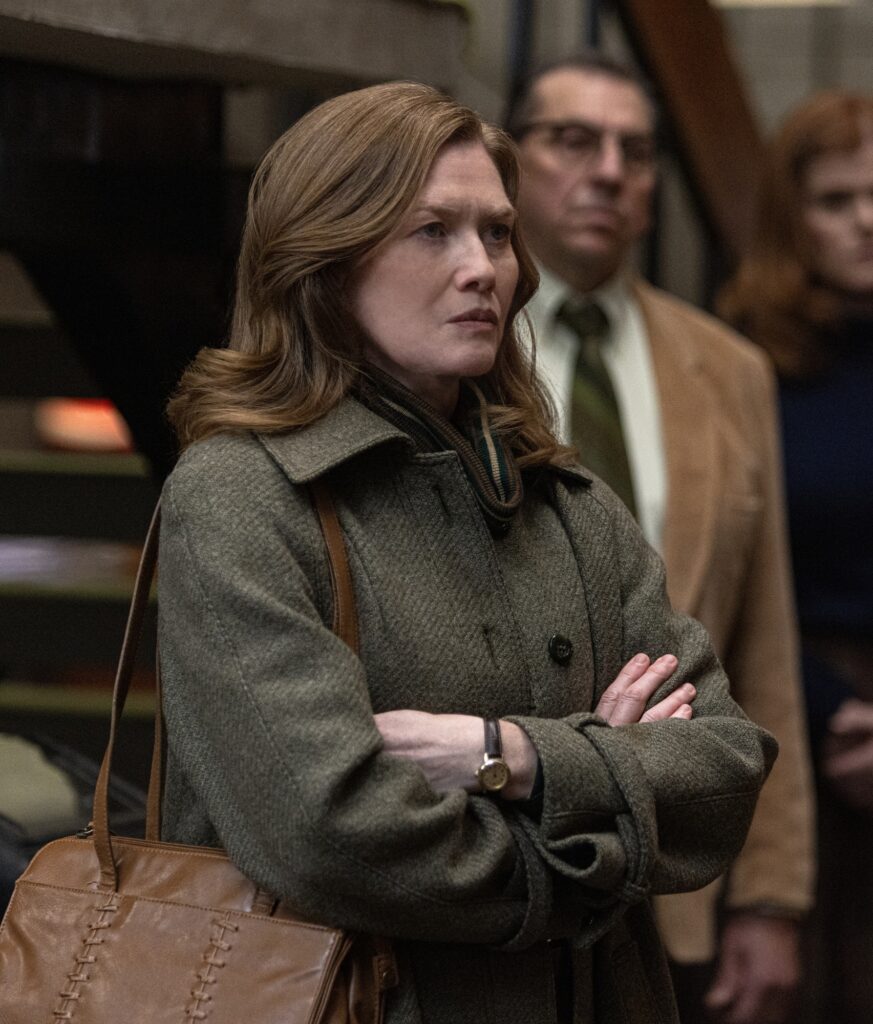
Enos found her way into Barbara by thinking about the women she knew growing up in church.
“There was always a lot of good ladies around who knew how to step into someone’s home in an uncomfortable situation, and provide food, and provide comfort, and be present,” she said.
“What an incredible skill set that is to just be present, and be a witness, and be willing to do what needs to be done.”
That observation prompted Polaha to make one of the most interesting connections of either conversation.
He brought up Andy Warhol’s famous prediction that everyone would someday have 15 minutes of fame and contrasted it with an earlier kind of community, one that was “exclusive of the rest of the world, but inclusive of each other.”
Then Tony blew a hole through it.
“This is the cross-section of the explosion of fame, and national sensationalism, and being broadcast nationwide, coast to coast,” Polaha said. “And it sort of blew this community apart on a national level.”
And there it is.
That’s where a bizarre 1977 hostage crisis begins looking an awful lot like 2026.
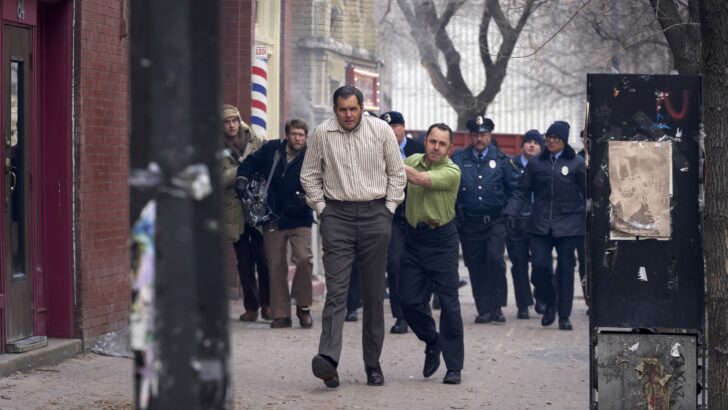
Tony didn’t merely take Dick Hall hostage. He constructed an event.
He understood that being angry wasn’t enough. Being wronged wasn’t enough. Even doing something outrageous wasn’t enough.
Someone had to tell his story. Tony chose Fred Heckman because people trusted Fred, and that distinction matters enormously.
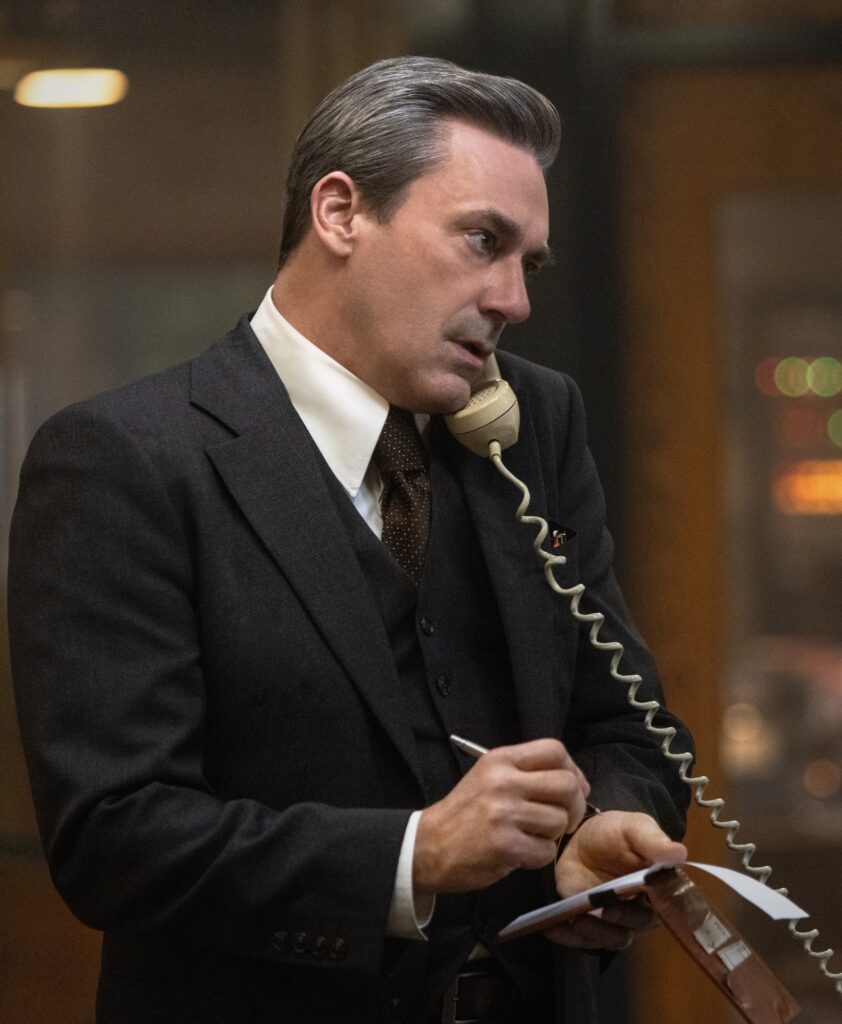
Ryan put it in much more contemporary terms.
“He wants to be heard, which I think is a feeling that many people have — why we see so many people on social media and people trying to be influencers — is people just want to be acknowledged and to be heard,” he said.
Tony needed Fred to give him that platform. Today, he wouldn’t. He could go directly to us.
That’s a staggering change in less than 50 years, and it’s one reason American Hostage feels more relevant now than any other dramatization of the same historical event has any right to feel.
When I asked the producers how removing that gatekeeper changes the relationship among journalism, spectacle, and control of the story, co-creator and co-showrunner Eileen Myers went somewhere even larger.
“I think it changes it at our peril,” she said.

Myers said the writers deliberately looked back at an era when there could still be something resembling “an agreed-upon reality,” invoking Walter Cronkite and a time when the Fourth Estate was regarded as a public trust.
Fred doesn’t merely possess an audience. He feels responsible to it.
That’s why his predicament in the opening episodes is so much more complicated than deciding whether to put Tony on the radio.
If Fred participates, he can potentially keep Dick alive. But the moment he begins affecting events rather than merely reporting them, he becomes part of the story.
And Tony knows it.
Arkin sees Fred and his fellow journalists as standing on the edge of a transformation they don’t yet completely understand.

“The technology was allowing things to be broadcast, and for reporters to be on the scene as things unfolded in a way that they had never been before, and people were seeing things unfold in real time,” Arkin said.
The media, he said, was essentially “playing catch-up” as it tried to understand the responsibilities that came with that new power and how easily journalists themselves could become part of the events they were covering.
It’s difficult not to watch that from our vantage point and feel a little melancholy.
Myers noted that the Kiritsis story occurred “on the precipice” of one of the early media circuses, just as news was beginning its move toward infotainment.
“We’re right on the cusp in 1977 of news starting to really change and go into more of an entertainment format,” she said.
And here we are.

News became entertainment. Entertainment became news. Journalists became personalities. Personalities became brands. The audience got its own publishing tools, and eventually everybody got the opportunity to tell their own version of reality without waiting for Fred Heckman to answer the phone.
Tony Kiritsis would have loved the internet — God help us all.
But that’s also what the passage of time has done to this story.
In 1977, Tony’s ability to seize a platform was extraordinary. In 2026, the extraordinary part is that he needed to seize one at all.
That doesn’t mean American Hostage is merely an eight-hour media critique wrapped around a shotgun.
There are still corners of the story that previous versions haven’t had the time to explore, and Myers believes that’s where the series format gives this adaptation its reason to exist.
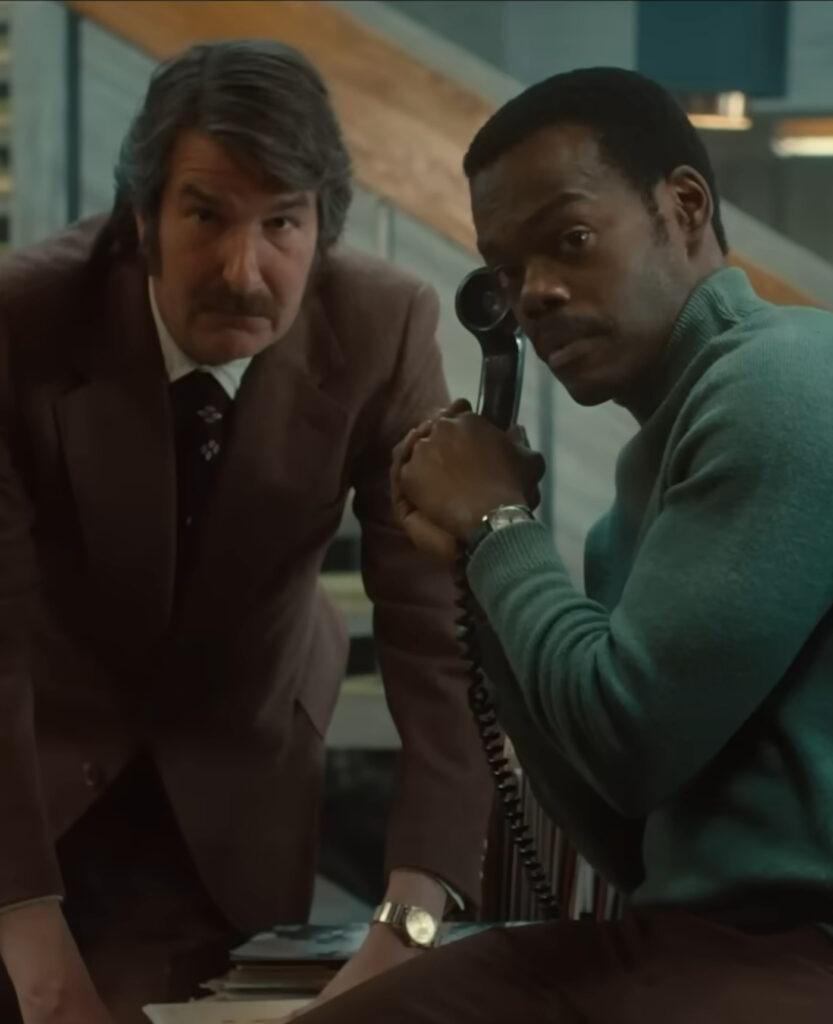
Their research uncovered extensive infighting among law enforcement and the district attorney’s office during the hostage crisis, including what Myers described as “petty behavior” occurring while a man’s life was in danger.
Some of that is funny because, well, humans.
Some of it leads somewhere darker.
“A lot of what hasn’t been explored was some of the more nefarious ways that law enforcement dealt with this hostage crisis,” Myers said.
Eight episodes also let the series spend more time with Barbara and Ibby and examine what the crisis does to the families orbiting Tony and Dick.
“We had an opportunity to look at their families and see not just the hostage crisis, but how the people involved in this changed over the course of these 68 hours,” Myers said.
“By being able to go into the layers of their families and their personal relationships, I think we were able to really tell a deeper story beyond just the spectacle of man with gun, man held hostage.”
And that’s probably the best argument for why we’re doing this again.
American Hostage isn’t asking us to spend eight hours wondering whether Tony Kiritsis will pull the trigger. History has already spoiled that question.
It’s asking us to look at everyone standing around him — the hostage. The reporter. Their wives. The police. The lawyers. The audience. And, eventually, us.
Because the facts of Tony Kiritsis’ story have been sitting there for nearly 50 years. What keeps changing is the world looking back at them.
New episodes of American Hostage air on MGM+ on Sundays at 9/8c.
-
American Hostage Series Premiere Review: Somehow, This Story Is More Relevant Than Ever
American Hostage brings the Tony Kirstis, Dick Hall, and Fred Heckman story to the small screen, proving some stories never get old.
-

The Westies’ Tom Brittney and Sarah Bolger Explain Why Jimmy and Bridget’s Secrets Keep Them Together
Tom Brittney and Sarah Bolger dig into Jimmy and Bridget’s unusual relationship, their shared secrecy, and what may come next on The Westies.
-

Jon Hamm’s American Hostage Takes Another Run at One of the Strangest True Stories Ever
Jon Hamm leads American Hostage, MGM+’s new take on the bizarre Tony Kiritsis case, with eight episodes to dig deeper into the true story.