Love Story Season 1 Episode 5 covers an extraordinary amount of ground in under an hour. Hyannisport. The proposal. The launch of George. The unraveling of Calvin and Kelly Klein.
And, of course, the Battery Park fight — one of the most scrutinized moments of John F. Kennedy Jr. and Carolyn Bessette’s relationship.
It’s a pivotal episode, the midpoint crucible that asks whether love is enough when legacy, scrutiny, and expectation press in from every direction.

For writer and producer Kim Rosenstock, the episode wasn’t built around the cultural narrative. It centered on a single question:
“Can we make it long-term?”
That question — more than the paparazzi footage, more than the headlines — became the emotional spine of the hour.
The Question That Anchored the Episode
Love Story Season 1 Episode 5 moves quickly — Hyannisport, the proposal, George’s launch, Calvin and Kelly’s unraveling, and the Battery Park fight — but Rosenstock insists the structure was intentional.
“We knew we were going to do an episode with this fight,” she says. “It was this turning point in how the narrative was shaping up about them in the press.”
But the public turning point wasn’t the emotional one.
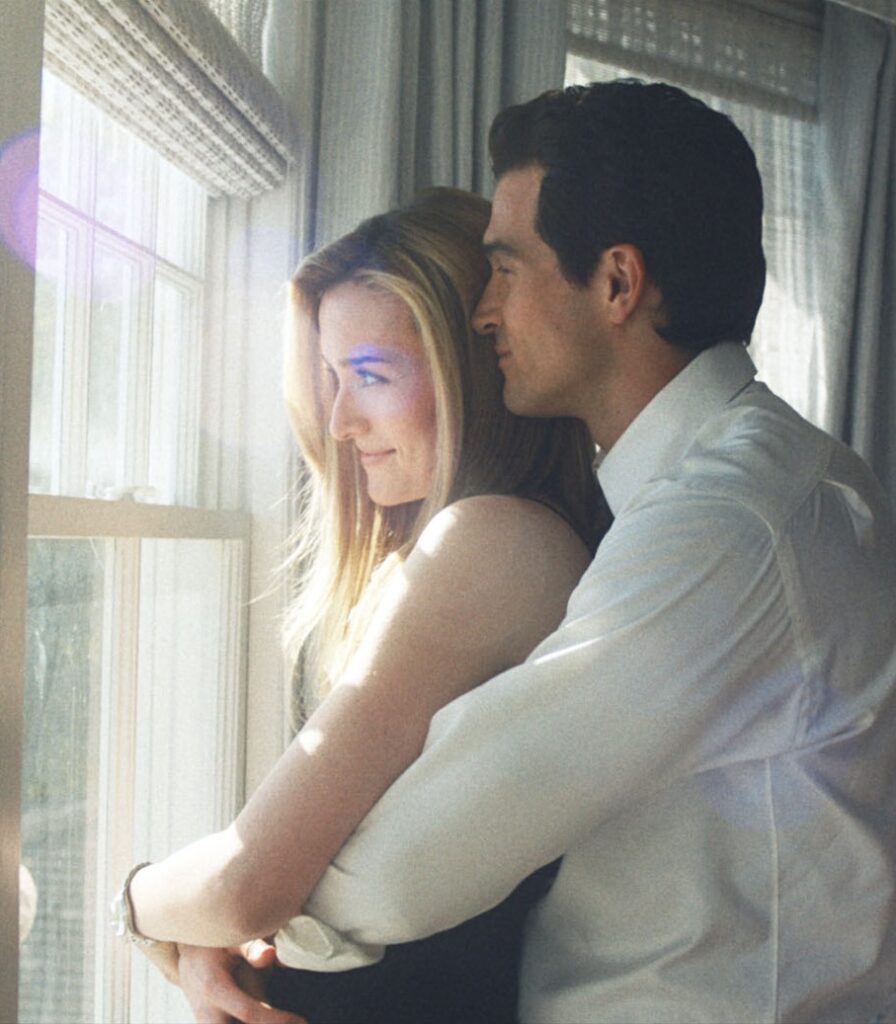
“For both of them,” she explains, “the question was: Can we make it long-term as a couple?”
That question — deceptively simple — fractures depending on perspective.
“For Carolyn, it’s really, can I be a Kennedy? Can I be the wife of America’s son, America’s prince? I’m in love with this guy. He’s exhilarating. He’s brilliant. He’s everything I want. But can I truly be part of his world?”
That’s what makes Episode 5 feel heavier than the ones before it. Falling in love is intoxicating. Choosing a life together requires sobriety.

“It’s a very different question than, ‘How do I know if I love you?'” Rosenstock says. “It’s, are we cut out to do this together?”
Love Story, she explains, was built by “dropping in on pivotal emotional moments.” The series doesn’t track every moment of their relationship. It isolates the pressure points — the moments where the relationship either deepens or fractures.
Episode 5 is that crucible. The rose-colored glasses come off, and what’s left is the risk.
Not a Docudrama — An Emotional Truth
With so many competing accounts of John and Carolyn’s lives, Rosenstock knew historical fidelity alone wouldn’t guide the writing.
“We’re not making a docuseries,” she says. “It’s not a biopic.”
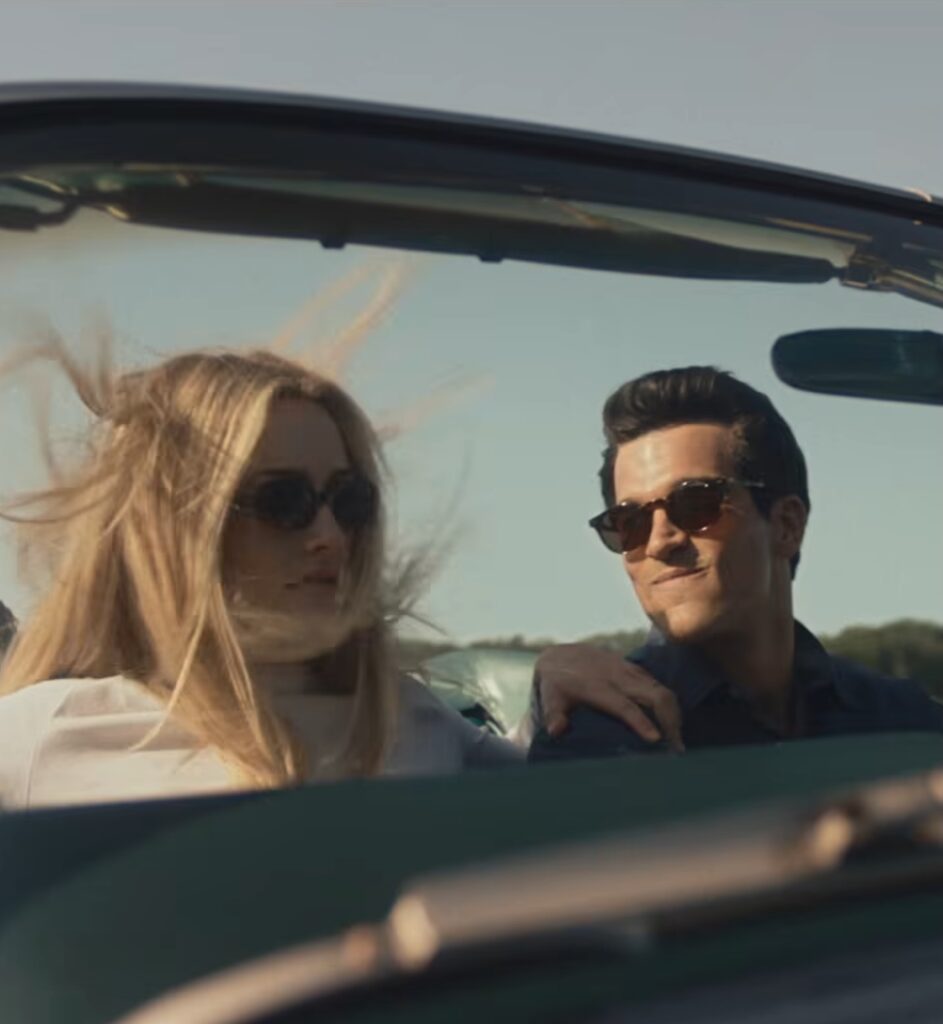
Instead, the show operates on what she calls emotional essence.
“It’s capturing the emotional truth of this love story — how it made all of us feel.”
The research was extensive. But the deeper challenge wasn’t finding information — it was navigating contradiction.
“Every single event in their life has eight different people who will tell you what was happening,” she says. “It’s like Rashomon.”
In other words, history doesn’t offer clarity. It offers versions. So the writers adopted a filtering principle: if it didn’t serve the love story they were telling, it didn’t belong in the scene.
“We sifted everything through that,” she explains. “If it wasn’t lining up with the emotional truth, then we held it in our heads, but it didn’t necessarily go on the page.”
That approach isn’t about ignoring facts. It’s about choosing perspective.
In a cultural narrative that often frames John and Carolyn as a myth, headlines, or a cautionary tale, Love Story chooses intimacy instead.
Why Calvin Klein and His Wife, Kelly, Matter
The Calvin and Kelly storyline runs parallel to John and Carolyn’s turning point — one couple quietly dissolving while another stands on the brink of commitment.
For Rosenstock, that juxtaposition wasn’t decorative.
“It’s one version that ends while we see this other couple at the beginning of their journey.”

Kelly voices a haunting question: If I knew then what I know now, would I still say yes? Her answer is yes — but not blindly.
“Carolyn knows what she’s getting into,” Rosenstock says. “She’s not under any illusion about how much her life is going to change.”
That pause — that hesitation before accepting the proposal — becomes strength rather than doubt.
“It’s unrealistic to have no questions,” Rosenstock adds. “If you have no doubts, chances are you’re not really facing the truth.”
The Calvin and Kelly storyline reframes marriage not as a fairy-tale inevitability but as a risk — a choice that must be made consciously.
“Every person is a risk,” she says. “Every choice is a risk.”
And on Episode 5, John and Carolyn finally confront that reality head-on.

Hyannisport: The Castle
The scenes in Hyannisport could have been pure Kennedy pageantry. Instead, Rosenstock treats it as a form of emotional disorientation for Carolyn.
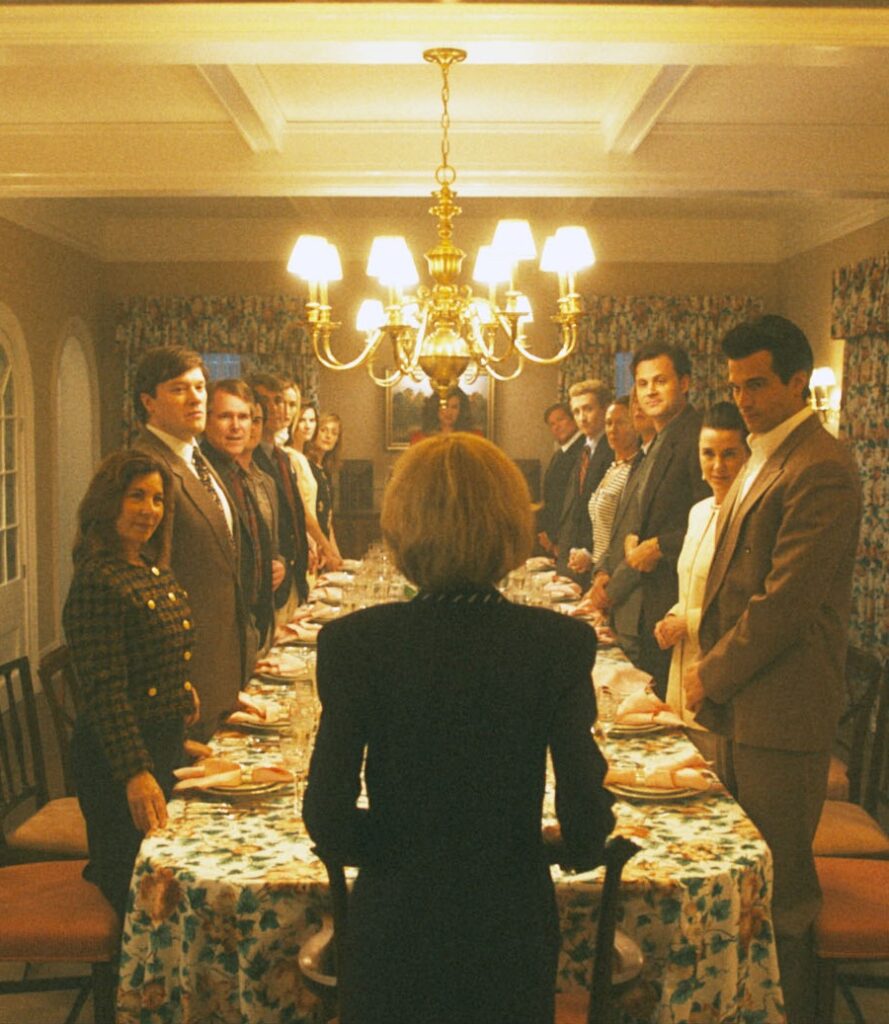
“This is the kingdom,” she says. “It’s like going to the castle, and Ethel is the queen.”
The dinner scene — rooted in firsthand accounts — isn’t meant as hazing. It’s cultural immersion, the expectation of fully formed political opinions. The pace, the hierarchy; it’s all very specific.
Carolyn, so often the most confident person in any room, is suddenly off-balance.
“She’s knocked off her game,” Rosenstock says. “She’s not used to that. And she doesn’t like that feeling.”

More destabilizing is John’s inability, in that moment, to recognize what she’s experiencing.
Like any couple early in a relationship, they’re navigating the awkward realization that what feels minor to one person may feel seismic to the other.
Hyannisport isn’t about rejection. It’s about exposure. It’s the moment Carolyn realizes that loving John means inheriting something larger than him.
That realization lingers through the proposal.
Re-Editing a Tabloid Moment as a Love Story
Rosenstock remembers watching the Battery Park fight as a kid — the footage replayed endlessly on television, cut together to tell a very specific story.
“It got a very specific edit,” she says. “To fit a very specific narrative.”
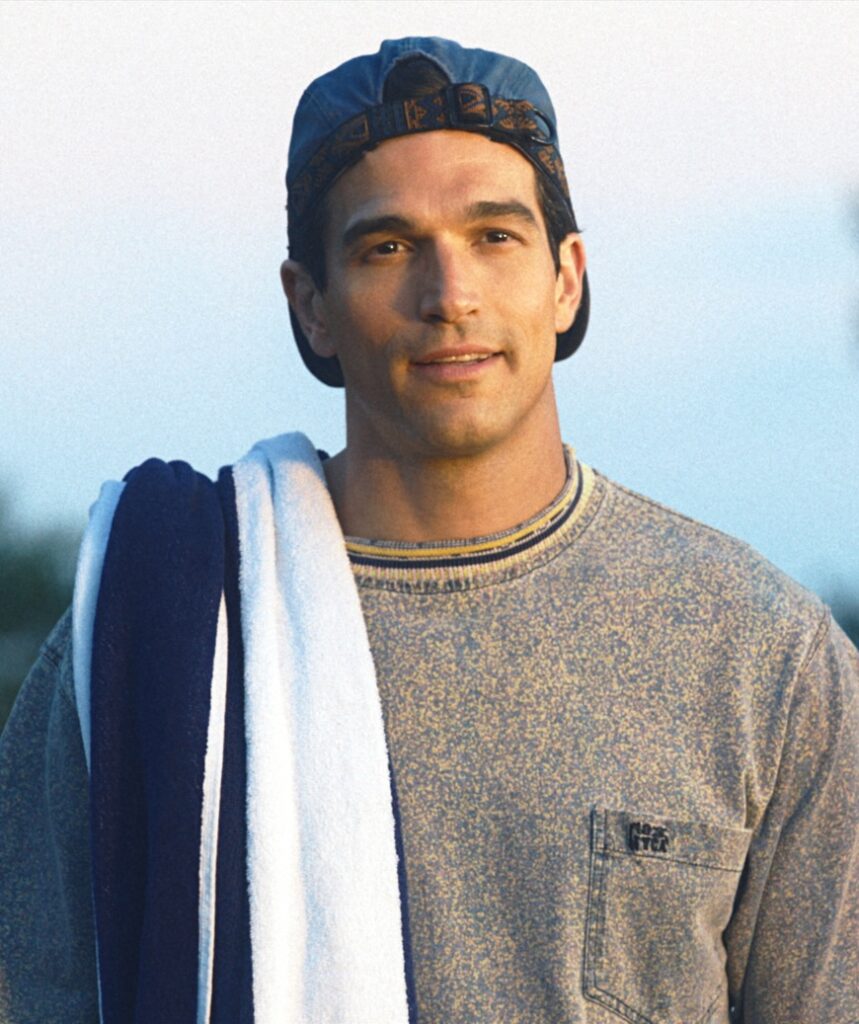
But when she revisited the footage while writing the episode, something else stood out.
“There’s almost no audio,” she explains. “All we have are these images that have been put together in a very specific order… But there are these little moments in between where they’re just quiet. They’re just sitting there.”
And then the detail that changed everything: “They’re not leaving.” Even in the middle of a public, humiliating argument, neither one walks away.
“There’s this tenacity that they have,” she says. “Even as they’re having this very emotional, explosive thing going on — they’re not giving up.”
That refusal to abandon each other became the lens through which the writers approached the scene.
“What if we give this fight the love story edit?” Rosenstock asked in the room.
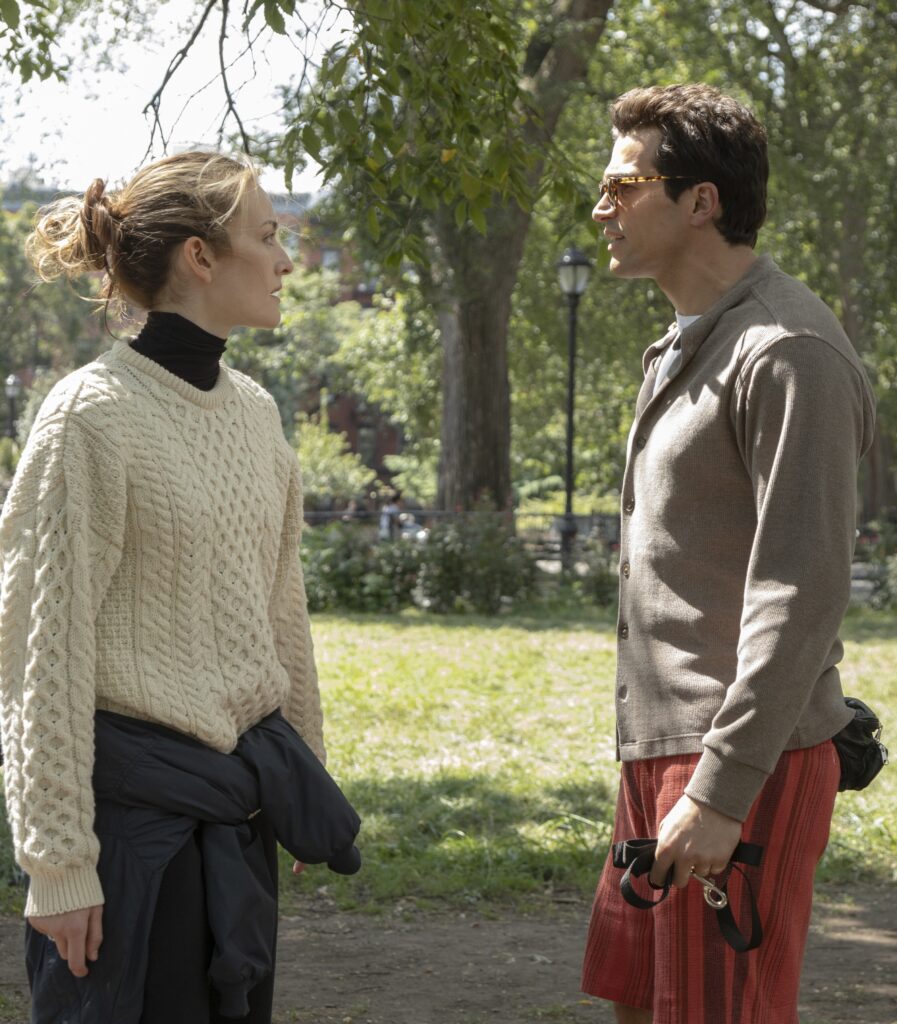
Instead of accepting the tabloid framing — that this was evidence of toxicity — the team wondered what it would look like to treat the fight as a necessary rupture.
“Having conflict is not a bad thing,” she says. “It’s about knowing how to have it and how to repair after it.”
In that reframing, the fight isn’t about the televised blowup. It’s about two people finally saying the things they haven’t said yet — fear, insecurity, resentment, doubt — before making a decision about whether to commit.
“It’s messy,” she says. “It doesn’t come out beautifully and eloquently. That’s not how real people fight.”
But what matters isn’t the mess. It’s the choice afterward.
At its core, Rosenstock believes the scene works because it captures something universal: the moment when a couple decides whether conflict means the end — or the beginning of something deeper.

“What if this fight was really good for them?” she says.
And once you see it that way, the footage changes. It becomes less about what was captured and more about what was never heard.
The Risk of Choosing Each Other
By the time Episode 5 closes, the question isn’t whether John and Carolyn love each other.
It’s whether they’re willing to take the risk.
“Everyone is a risk,” Rosenstock says. “At some point, you have to decide — is it worth taking it?”

Episode 5 doesn’t mythologize them. It humanizes them.
It reframes one of the most infamous public fights of the 1990s not as a tabloid feeding frenzy, but as a turning point. Not as proof of failure, but as proof that intimacy requires rupture before repair.
And once you see it through that lens, it’s hard to watch the footage the same way again.
Love Story airs Thursdays at 9/8c on FX. We’ll continue our coverage with reviews and interviews throughout the season.
-

13 Shows to Catch This Summer If You Haven’t Taken the Plunge Yet
Need a new show to binge this summer? From The Pitt and Widow’s Bay to Marshals and Memory of a Killer, these recent hits deserve your attention.
-

17 Actors Pulling Double (Even Triple) Duty on Our Screens
Who is showing up all the time on your television? Check out our list of the hardest-working actors pulling double duty on our screens.
-
Love Story Season 1 Finale Review: “Search and Recovery” Reveals John and Carolyn’s Last Chapter
There was no way out of Love Story Season 1 Episode 9 except through tragedy. That doesn’t make it any less heartbreaking.