For the longest time, procedurals have followed a fairly common framework, but Sheriff Country is changing it for the better.
We’re used to each episode having a clear beginning, middle, and end, with the case set up to be solved and fully resolved by the end of the hour.
That is, unless something has clearly been set up as a two-parter, often indicated by the episode title.
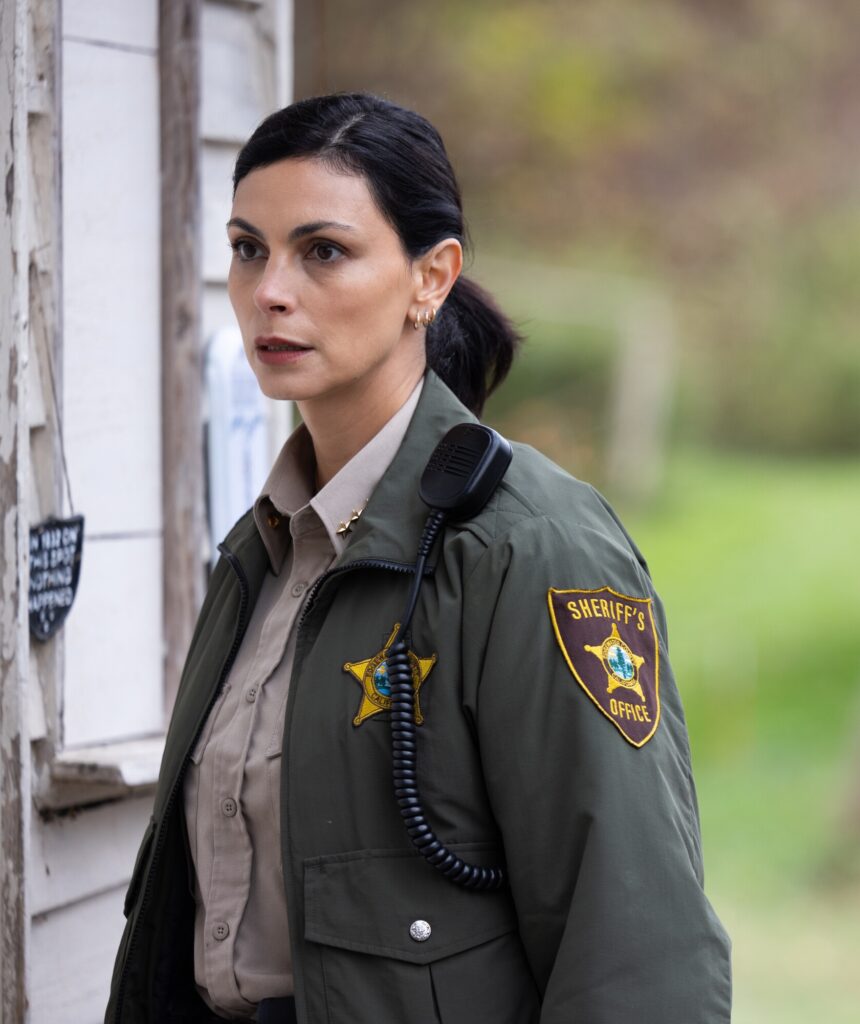
While this setup allows viewers to jump into any episode they want without worrying too much about overarching storylines, it limits the kinds of investigations that can occur.
This is where Sheriff Country is changing things.
Sure, there have been cases wrapped up in one installment, but most others have taken two or more to complete, and that’s without the Fire Country crossover event.
It’s something other shows need to pay attention to.
Sheriff Country Offers a More Realistic Form of Storytelling
Look, we love seeing cases wrapped up quickly. There’s still a need to see the bad guys lose and the good guys win.
However, wrapping up a case on the likes of NCIS or FBI isn’t all that believable.
Some of the cases the character investigates would involve a lot of paperwork, phone calls, and red tape, and would take days or weeks to get through.
The idea of solving a case so quickly is laughable at times, and Sheriff Country has recognized that.

The opening case with Skye’s murder trial took four episodes to wrap up fully.
Not only did this allow for a believable arc in a murder investigation, but it also gave time to get to know the main players on the series.
We got to see Mickey initially step back from the case, knowing it would be a conflict of interest, and then decide to take matters into her own hands when everyone else was against Skye.
Just recently, we got the search for the missing girls of Edgewater.
That case initially started with a mention of Cassidy’s sister Zoe, and eventually, it was clear that other girls went missing at or around the same time of the same festival.

There was a pattern, and Cassidy was able to work it out throughout a few episodes of Sheriff Country Season 1.
When she did take it to Mickey, it wasn’t even solved within an episode, allowing time for the investigation to unfold and for small clues to be dropped so we could figure it out.
This isn’t to say Sheriff Country is perfect in how it handles this. There are forgotten storylines here and there — and there are better ways to keep them running in the background.
However, we have time to live through the whole case, which makes the characters work harder to solve the puzzle.

It Throws Us Off — In a Great Way
On top of that, Sheriff Country’s storytelling style has thrown us off a bit.
We’re so used to cases being wrapped up in an episode, and we expect that every time.
Except for the murder trial, the earlier episodes of the Fire Country spinoff did give us cases that could be solved in an episode.
We got to see the team at work, gelling as a whole and showing us the difference between small-town policing and what we’re used to seeing on shows like Chicago PD and High Potential.

Mixing in some two-episode arcs makes us sit up and pay attention.
The series is no longer predictable. Sure, we know that eventually the good guy is going to win, but it takes longer to get there, which allows for more red herrings and questions.
We have more time to build theories, and there’s a layer of excitement because we can’t see just how it will all play out.
Characters we didn’t know about get introduced in the second half of the story, or clues have more time to develop.
Who saw Stephanie being the first of the missing girls in Edgewater? The plot got time to gather steam and take some big narrative risks.

With a one-hour installment, Stephanie’s arc would have felt thin, as there wouldn’t have been time to tell the full story, but the second hour allowed that arc time to breathe.
If we’re left wondering if a case can be wrapped up in an episode, we’re more likely to pay closer attention to the overall story.
Of course, multi-episode events can’t be done all the time, as that can also become as tiresome as the case-of-the-week format.
However, they can be done now and then, and other procedurals need to take note, as it’s what makes Sheriff Country stand out.

What’s your take on Sheriff Country’s approach to cases and giving them time to breathe? Is it enhancing your enjoyment of the show, or do you prefer an old-school procedural?
Let’s dive into it in the comments section.
You made it to the end — and that means a lot.
We’re an independent site run by passionate fans, not studios or corporations. If you enjoyed this piece, please share it or leave a comment — it really does help.
-

ABC & CBS’s Fall Premiere Dates Deliver Some Early Surprises and Proof That Patience Pays Off
ABC and CBS’s Fall premiere slate is promising, especially with RJ Decker landing early, but mostly, it shows patience will pay off.
-

Must-Have TV Guests for Our Independence Day Party
We have a guest list that will make this Independence Day worthwhile. Who would we invite to our 4th of July party? Find out here!
-

Double Standards Make Eva’s Redemption Nearly Impossible — But I’m Excited to See Sheriff Country Try
We need to see some sort of redemption arc for Eva on Sheriff Country Season 2, but I can’t see how that’s possible right now.